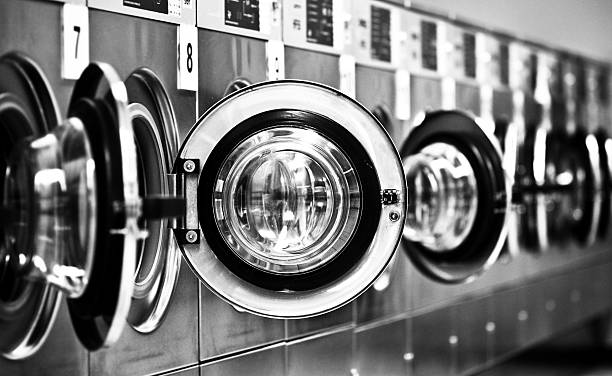
Coin-operated washing machines silently facilitate the daily operations of apartment complexes, coin operated laundry facilities, and college dormitories. The managers of such facilities count on this effective and efficient system since it does not require any technical support.
But how does a coin laundry machine work? Basically, the insertion of money into a machine and subsequent activation of a timer will result in the starting of the motor, opening of water valves, and rotation of a drum. For decades, SelfOp Laundry has been providing such machines to facilities all over the country.
How Does a Coin Laundry Machine Actually Work?
In principle, a coin-operated laundry machine relies on an elementary series of mechanical and electrical actions. As soon as a coin is inserted into the acceptor or the card reader is tapped, a little switch triggers and power becomes available to the control board. Then, the control board starts the water inlet valve, turns on the drum, and starts the timer for the whole cycle.
Everything happens identically, and this is the reason why the process has remained unchanged for so long. There is nothing to update or to launch because the machine just requires power, water, and a payment action.
What Are the Essential Parts of a Coin Laundry Machine?
Certain basic elements are needed for making a machine work efficiently. It is important to know the list of these elements since this knowledge helps one perform maintenance work and prolong the lifetime of the machine.
- Coin acceptor/card reader: It accepts coins/cards, counts coins/cards, and starts the process.
- Timer and control board: It regulates the time of the process, the temperature, and the speed of rotation.
- Motor and drum: It washes and dries the clothes.
- Valves and heater: These regulate the temperature and moisture content.
- Filter and exhaust vent: It ensures that the dryer works correctly.
All the mentioned parts are interrelated and need each other to function; thus, a damaged coin part or a blocked vent can interfere with the whole process despite the good working condition of the motor.
How Do the Payment Systems Determine When to Initiate a Cycle?
Coin payment systems are a lot more accurate than one might think. In the coin acceptor mechanism, the system will take measurements based on the physical dimensions, weight, and metal composition of each individual coin and check to make sure it matches that of an accepted coin. This prevents the use of counterfeit coins that might be used to steal from the property’s owners.
In modern coin-operated laundry equipment, a mechanical system of coin acceptance is combined with a digital system such as prepaid cards or mobile phone payments. While the coin slot may still exist, a circuit board takes care of the authentication process.
How Can You Tell the Best Coin-Operated Laundry Machines Apart?
All machines do not have the same durability when it comes to handling the rigors of daily, intense use. The best coin-operated laundry machines come equipped with high-end motors, sturdy drums, and parts made to withstand thousands of washes rather than a few hundred.
Durability is just as important as the available features. A machine capable of handling 15,000 cycles as opposed to 5,000 will mean big savings over time despite the slight increase in the cost of buying it in the first place. Energy efficiency is also becoming increasingly important due to the direct influence on the bottom line monthly.
Why Does Multi-Family Real Estate Use Coin-Operated Machinery?
Multi-family real estate requires machinery that will cater to the ever-changing needs of tenants in terms of turnover. In this context, coin-operated washers dryers multi-family settings provide a solution as they take away the responsibility of management and collection from the property’s staff.
Tenants make payment on a use basis, while the property makes profits from its common area facility without having to install machines in all units. Additionally, coin-operated laundry facilities require less maintenance due to their lower number compared to the large tenant population using them.
How Should Property Managers Select Washer-Dryers for Apartment Buildings?
Selection of proper laundry machines for apartments begins with calculating the actual need for laundry services on the part of the residents. There is a world of difference between a laundry machine requirement in a 50-unit apartment and a 300-unit apartment, and such differences must be quantified in the selection process.
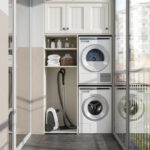
The size of the laundry room, plumbing, and electrical supply will also guide the decision-making process. A stackable washer dryer is better suited where the laundry room space is smaller, while separate washing and drying machines can be used where the space available is more.
Sustaining the Proper Functioning of Your Coin Laundry Over Time
Having some basic knowledge about the workings of these machines makes selecting, maintaining, and maximizing the benefits of commercial laundry equipment a whole lot simpler. Irrespective of whether the aim is to reduce call-outs or increase the residents’ satisfaction, it certainly helps to have the right configuration month after month.
SelfOp Laundry offers rugged and semi-professional machines that are designed for laundromats, apartments, and hospitality sites that require reliable equipment. The team provides installation and maintenance services to prevent any confusion that one may have in terms of selection.
For any laundry renovation and installation requirements, contact us to obtain your complimentary equipment quotation.
What is the approximate time for a coin laundry cycle to complete?
The wash cycle generally takes 30-40 minutes, while the dryer cycle takes 45-60 minutes depending upon the load size and moisture content. Some older machines tend to operate a bit longer, which is why it is always better to post a cycle time estimate to help residents make use of their laundry hours accordingly.
Item #2Can the coin laundry machines be upgraded to accept card payments or mobile apps in the future?
Yes, many machines can be retrofitted to allow for card or mobile payments without completely replacing the whole machine.
Why does the coin machine reject valid coins from time to time?
There could be various reasons behind the rejection of coins by the coin machine, such as malfunctioned coin slot, a dirty coin sensor, or slightly defective coins. The problem can easily be resolved by just cleaning the mechanism. If the rejection continues even after cleaning, the coin mechanism needs inspection.
How often should maintenance be done for commercial washing machines?
The norm among laundry service providers is to do maintenance at least once within a period of three to six months in order to avoid larger problems that may arise from worn-out belts, hoses, or filters.
Should larger buildings require additional machines or just large ones?
This varies depending on the number of residents in a building and how busy the washers are during certain periods; at times, two small washers are better than one large washer.