For rental property owners and managers, the best capital improvements do more than make a property look newer. Strategic upgrades can lower operating and maintenance expenses, improve the resident experience, create new revenue opportunities, and strengthen the property’s long-term value. The challenge is determining which projects are most likely to deliver meaningful returns rather than simply add another expense to the capital budget.
From building systems and water-saving improvements to upgrading technology and laundry facilities, prioritizing improvements by potential financial and operational impact can help property managers make every capital dollar work harder.
Capital Improvements Rental Property Managers Should Evaluate for Long-Term ROI
Capital planning requires looking beyond the immediate price of an upgrade. A lower-cost project is not necessarily the better investment if it requires frequent maintenance or delivers little measurable benefit. Conversely, an improvement with a larger initial investment may prove valuable if it reduces recurring costs, improves reliability, generates revenue, or extends the property’s useful life. That makes total return a better starting point than upfront cost alone.
Start With the Property’s Biggest Operational Liabilities
Before investing in amenities or cosmetic improvements, property managers should identify infrastructure that is approaching the end of its useful life or contributing disproportionately to operating expenses. Roofs, HVAC equipment, plumbing, electrical infrastructure, building envelopes, and water-heating systems are obvious examples. Deferring replacement until equipment fails can turn a planned capital expenditure into an emergency, which is sometimes accompanied by water damage, resident disruption, overtime labor, and other unplanned costs.
Maintenance histories can help identify these priorities. If a particular system generates repeated service calls, consumes excessive utilities, or causes recurring resident complaints, its true cost extends well beyond the repair invoices.
Capital planning can therefore benefit from examining:
- Equipment age and remaining useful life
- Frequency and cost of repairs
- Energy and water consumption
- Resident complaints and service requests
- Downtime and disruptions caused by equipment failure
- Potential cost and consequences of an unexpected failure
This approach shifts the question from, “How much will replacing this cost?”, to, “What is keeping the existing system costing us?”
Target Recurring Utility Costs
Energy and water are particularly crucial because savings from efficiency improvements can continue throughout the investment’s useful life. According to ENERGY STAR’s multi-family housing resources, reducing energy, water, and waste can lower multi-family operating costs while potentially increasing asset value and marketability. ENERGY STAR also reports that a comprehensive approach to energy management can improve energy efficiency in US multi-family properties by 15% to 30%. That creates opportunities throughout a property.
Replacing outdated HVAC systems may reduce energy consumption and repair costs. LED lighting and controls can reduce electricity use in common spaces. Building-envelope improvements can decrease heating and cooling demands. Efficient water heaters can address energy- and water-related operating expenses.
Water deserves particular scrutiny because it flows (literally) through so many areas of a rental property, and small inefficiencies can accumulate across dozens or hundreds of units. Older toilets, faucets, showerheads, laundry equipment, irrigation systems, and leaking plumbing can all contribute to unnecessary consumption. EPA WaterSense recommends that multi-family property managers inventory water-using fixtures, appliances, systems, and management practices to identify and prioritize cost-effective efficiency projects.
Measure Before You Invest
One of the most useful principles for capital improvements rental property managers can adopt is establishing a baseline before selecting projects. Historical utility bills, equipment maintenance records, service requests, resident surveys, and revenue data provide useful benchmarks. They also make it possible to evaluate whether an investment actually performs as expected afterward.
Water benchmarking can be particularly useful. EPA offers a 1-100 Water Score for eligible multi-family properties through the ENERGY STAR Portfolio Manager, enabling owners and managers to compare a property’s water performance with similar properties nationwide. The score uses twelve months of whole-property water data along with property characteristics.
Benchmarking may reveal that a property thought to be performing reasonably well is actually consuming significantly more water or energy than comparable buildings. This information can help managers direct limited capital toward improvements with greater savings potential.
High-Impact Capital Improvements Rental Property Managers Can Prioritize
Once essential structural and safety needs have been addressed, capital planning can focus on improvements that enhance efficiency, resident experience, and financial performance. The strongest candidates often complete several of these objectives at once.
Upgrade HVAC and Building Energy Systems
HVAC equipment is a logical target because heating and cooling affect operating costs and resident comfort. Aging systems can also become increasingly expensive to maintain as components wear out and replacement parts become harder to source. Potential projects include high-efficiency HVAC equipment, programmable or smart thermostats, improved insulation, air sealing, upgraded windows, and energy-efficient lighting in common areas.
The key is to evaluate upgrades within the context of the entire building rather than replacing equipment simply because a newer model is available. Benchmarking consumption before and after improvements helps determine whether the expected efficiencies are being achieved.
Improve Plumbing and Water Efficiency
Water-related improvements can be particularly attractive because they may reduce more than the water bill. Using less hot water can also decrease the energy required for water heating, while proactively replacing aging fixtures and plumbing components may reduce maintenance calls and the risk of damaging leaks.
EPA’s WaterSense Best Management Practices emphasize active monitoring, metering or submetering, leak detection, and timely repair as essential components of facility water management. The agency also notes that restroom and laundry equipment can account for a significant portion of facility water consumption, particularly in older buildings with inefficient equipment.
Potential investments include:
- High-efficiency toilets, faucets, and showerheads
- Leak-detection and water-monitoring technology
- Aging pipe and valve replacement
- More efficient water-heating equipment
- Irrigation controls and landscaping improvements
- High-efficiency commercial laundry equipment
The value of these projects becomes more apparent at scale. Saving a relatively small amount of water at one fixture may seem insignificant. Multiply those savings across hundreds of fixtures and thousands of uses each year, however, and the economics can change substantially.
Modernize Communal Laundry Facilities
Laundry rooms deserve particular attention because they sit at the intersection of several property-management priorities.
Residents need reliable access to laundry, whether the property is an apartment community, student housing facility, senior living community, or another institutional setting. At the same time, laundry equipment uses water and energy, requires maintenance, occupies valuable property space, and can produce ongoing ancillary revenue.
Older equipment can undermine each of these areas. Frequent breakdowns create resident frustration and maintenance demands. Inefficient washers may consume unnecessary water. Aging dryers can increase energy requirements. Outdated payment systems can also make the amenity less convenient to use and more burdensome to manage.
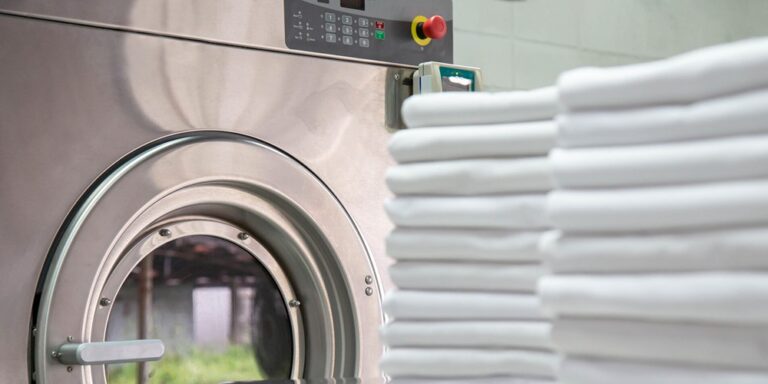
Modernizing a laundry facility can address these issues simultaneously. Newer commercial equipment can improve water and energy efficiency, while greater reliability can reduce service requirements and equipment downtime. Modern payment technology can eliminate the inconvenience of coin-only operations, while professionally managed self-serve laundry solutions can reduce the time that property employees spend maintaining an amenity outside their primary responsibilities.
EPA WaterSense specifically identifies residential kitchens and laundry as critical areas to examine when assessing multi-family water consumption. Its multi-family assessment resources help managers identify opportunities to reduce water and energy use and associated operating costs. For property managers, that makes laundry modernization more than an amenity upgrade. It can become part of a larger utility-management and capital-investment strategy.
Before replacing equipment, managers can review current water and energy consumption, maintenance history, downtime, equipment capacity, resident usage, and revenue. Comparing that baseline against the projected performance of upgraded equipment provides a much clearer picture of potential ROI.
Update Technology and Connectivity
Physical infrastructure is not the only area worth considering. Reliable connectivity increasingly supports residents and property operations.
Upgrading building connectivity can enable technologies like smart thermostats, electronic access controls, security systems, leak detectors, utility monitoring, and connected equipment. These systems can also provide managers with data that makes preventive maintenance and resource management easier. For example, a connected leak-detection system may identify abnormal water consumption before a hidden leak produces extensive property damage. Monitoring equipment performance can similarly enable maintenance teams to address developing issues before complete equipment failure occurs.
Therefore, the value is not simply offering more technology. It is actually creating infrastructure that supports more proactive and efficient property management.
Improve High-Use Common Areas and Amenities
Capital improvements should account for resident experience. However, managers should be cautious about assuming that expensive cosmetic upgrades automatically create equivalent value. Improvements to lighting, security, outdoor spaces, fitness areas, package-management facilities, laundry rooms, and other shared amenities may deliver stronger returns when they address services that residents use frequently.
Usage is an important distinction. An impressive amenity that few residents use may add less value than improving something that residents depend on every week. Laundry is a good example: Although it may not have the visual impact of a redesigned lobby, dependable laundry facilities can directly affect everyday convenience.
This is another reason that property managers should combine resident feedback with operational and financial data when setting capital priorities.
Track Results and Build a Smarter Capital Plan
Capital improvement planning should continue after installation. Property managers can compare post-project utility expenses, maintenance calls, equipment downtime, resident satisfaction, and ancillary revenue with the baseline established beforehand. The findings can then inform future capital decisions across an individual property or an entire portfolio.
This is especially valuable for efficiency projects. ENERGY STAR’s Portfolio Manager enables owners and managers to track energy, water, waste, and other performance metrics over time, helping them identify underperforming properties and verify the impact of improvements.
Water use should receive similar ongoing attention. A sudden increase can signal leaks or malfunctioning equipment, while declining consumption following fixture or laundry upgrades can help demonstrate that the investment is delivering the expected result.
For owners managing multiple properties, these measurements can turn one successful improvement into a repeatable strategy. If upgrading laundry equipment, plumbing fixtures, HVAC systems, or another asset generates measurable savings at one location, managers have stronger evidence for evaluating similar investments elsewhere.
Build Value by Investing Where It Counts
The best capital improvements in rental property solve today’s operational challenges while positioning the property for stronger performance tomorrow. Property managers can maximize the value of their capital budgets by prioritizing upgrades that reduce recurring expenses, address aging infrastructure, respond to resident expectations, and create opportunities for additional revenue.
Modernizing a communal laundry facility can check several of these boxes at once, transforming an essential resident service into a more efficient, reliable, and revenue-generating amenity. By taking a long-term, return-focused approach to capital planning, property managers can control costs today while building a more competitive and valuable property for the future.
Discover how SelfOp Laundry’s innovative laundry solutions can transform your property’s amenities and operational efficiency. By choosing our clients’ equipment, you can attract new tenants, increase satisfaction, and boost your property’s value. Contact us today to learn more about how these advanced systems can support your property management goals and deliver long-term benefits. Let us help you create a more reliable, cost-effective, and eco-friendly laundry experience for your residents.